When Trade Policy Moves Faster Than Your Contracts: Pricing Language That Withstands Tariff Shocks
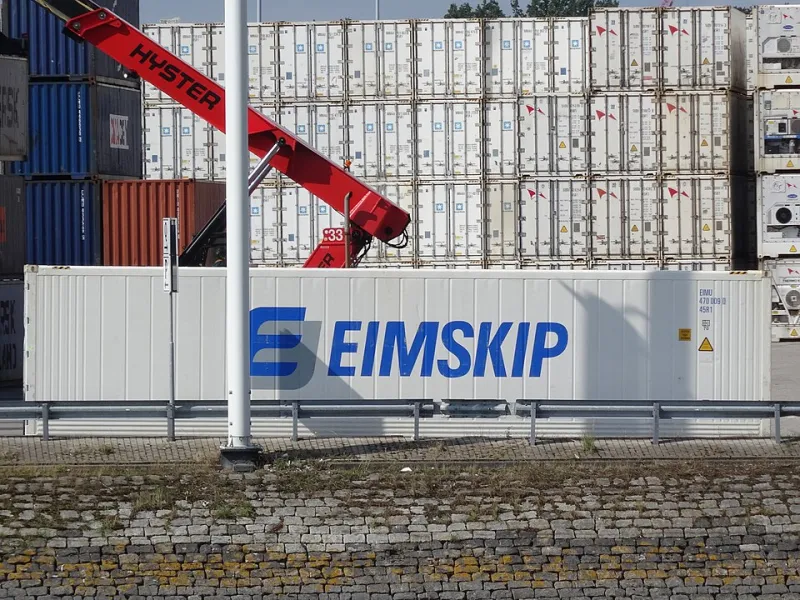
Photo: AgainErick, CC BY-SA 4.0, via Wikimedia Commons
In 2018, a mid-market furniture importer in North Carolina signed a three-year supply agreement with fixed pricing, on the reasonable assumption that trade policy would remain stable for the term. Within eighteen months, Section 301 tariffs had added 25% to landed cost on goods the contract had already priced. The supplier threatened default. The customer faced a choice between renegotiating from weakness or litigating a clause that had never anticipated the scenario.
That pattern has repeated — across steel, electronics, apparel, industrial components — often enough that it can no longer be treated as bad luck. Tariff schedules in the United States now move on political timelines measured in news cycles, while commercial contracts move on procurement timelines measured in years. The gap between those two clocks is where margins go to die.
The firms faring best are not predicting policy. They are writing contracts that assume nobody can.
Why Fixed Pricing Fails First
Fixed-price agreements concentrate all trade-policy risk on one party, and whoever carries that risk will eventually try to escape it. When the burden lands on the supplier, the escape routes are familiar: quality erosion, priority shuffling, forced renegotiation, or quiet insolvency. When it lands on the buyer, the escape route is simpler — a demand letter citing force majeure, material adverse change, or commercial impracticability.
Most of those arguments fail in court. US courts read force majeure clauses narrowly; a tariff is generally foreseeable, imposed by a known government, and therefore not the kind of unforeseeable event those clauses contemplate. Material adverse change clauses are, in practice, nearly impossible to invoke in ordinary commercial disputes. A supplier that walks away citing tariffs will usually lose — but the buyer's remedy is damages, not the product, and not on the timeline production requires.
The lesson is not that these disputes are unwinnable. It is that litigation is a terrible mechanism for absorbing a 25% cost swing. The contract should have absorbed it instead.
The Clause Stack That Actually Works
Index-Linked Pricing
The most durable structure ties price to an objective, published benchmark: a recognized customs classification's duty rate, a commodity index, or a published freight rate index. The formula matters more than the base price. Well-drafted provisions specify the exact index, the adjustment frequency, the calculation method, and a cap or collar limiting movement in any period. Vague language — "prices subject to adjustment for changes in duties" — invites the very disputes the clause was meant to prevent.
Tariff Pass-Through Provisions
Where full indexation is impractical, a targeted pass-through clause allocates duty changes explicitly: which party bears the first X percent, how the change is documented (customs entries, not press releases), how it flows into invoicing, and — critically — whether it works in both directions. One-way pass-through clauses are the first thing opposing counsel attacks; symmetric provisions survive scrutiny because they are transparently fair.
Dual-Sourcing Triggers
The strongest protection is contractual permission to leave. A well-drafted agreement lets the buyer shift a defined share of volume to an alternate source if total landed cost exceeds a stated threshold — without breach, without penalty, and with defined wind-down terms for the incumbent. Suppliers resist these clauses, and reasonably so. The compromise that tends to hold: triggers tied to objective, third-party-verified cost indices rather than the buyer's unilateral judgment.
Renegotiation Windows
A clause requiring the parties to meet and renegotiate in good faith if a specified cost metric moves more than a set percentage is not a solution by itself — courts will not impose an agreement the parties never reached. But paired with indexation and sourcing flexibility, it creates a structured off-ramp that keeps disputes out of the courtroom and inside the commercial relationship.
What Holds Up When It Gets Ugly
Dispute outcomes tend to reward precision. Clauses that survive challenge share three traits: they reference objective external benchmarks rather than party discretion; they specify mechanics — notice periods, documentation standards, calculation formulas — rather than principles; and they allocate risk symmetrically, so neither side can claim the provision was a trap.
Conversely, the provisions that collapse are the vague ones: hardship language with no formula, pass-through rights with no documentation standard, exit rights with no defined process. In a tariff dispute, ambiguity reliably benefits whichever party is breaching.
Building the Capability In-House
Rewriting a contract template is a legal exercise; deciding which risks to retain is an operations exercise, and it belongs with the people who own the supply base. Operations leaders should maintain, for every significant import category: the applicable Harmonized Tariff Schedule classification, the current duty rate and its history, the concentration of supply by country of origin, and a rough model of margin impact per ten points of tariff movement.
That last number — margin sensitivity — is the single most useful input to any negotiation over pricing clauses. It tells you exactly how much risk transfer is worth paying for, and how much you can concede.
Trade policy will keep moving faster than any contract can anticipate. The objective is not to predict the next schedule change. It is to ensure that when it arrives, the question "who pays?" has already been answered — in writing, with a formula, before anyone is angry.